Cambridgeshire
Police
History
Notes
CambridgeshirePoliceHistoryNotes |
|
|
|
Locations Balsham
|
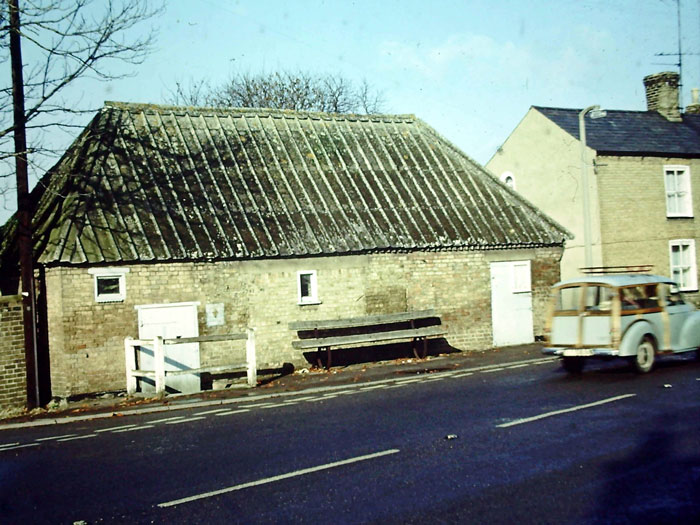
Cottenham Police Force 1841-1850.| Overview | Charge Book Summary | Police Inspectors | Lighting and Watching Act 1833 | We do not know precisely why local ratepayers in the 1840s proposed that the watching provisions of the Lighting and Watching Act should be adopted in Cottenham. It was a reasonably large and growing village; its population doubled between 1801 and 1851 (1841: 1,833 1851: 2,314). Cottenham was well connected by road to Cambridge, Ely and a number of villages, so strangers in the village would have been the norm. It was a time of change; enclosure of the parish commons, a change which would affect most families in the village, was being discussed. To the South of Cottenham, new uniformed police were operating in Cambridge Borough. To the North of Cottenham, Justices of the Isle of Ely were introducing a new rural police force. Isle magistrates were influenced by the disinclination of parishes to appoint efficient constables, poor remuneration for constables and an influx of disorderly persons from Norfolk after the appointment of rural police there. Minor disturbances and drunkenness were not uncommon in Cottenham and, as with many other Cambridgeshire villages, there were occasional problems of malicious firing of stacks and farm buildings and with theft of livestock. For example, Cambridge Independent Press 18 May 1839 p2 carried two advertisements each offering £5 reward for the recovery of horses stolen from Cottenham Common. There was hardly an issue of the local papers which did not contain a report of an incendiary offence in a Cambridgeshire village. There may have been problems with finding suitable unpaid parish constables for what would have been a fairly onerous and unpopular task. A meeting of Cottenham rate payers was called to consider adopting the watching provisions of the Lighting and Watching Act of 1833. The meeting took place in the village schoolroom on 1st April 1841, the Rev John Frere, Rector of Cottenham, in the chair. The meeting agreed to adopt the watching provisions of the Act and to appoint a Parochial Watchman. Five gentlemen were elected as Police Inspectors under the Act: John Morlin Goode (farmer and miller), John Male (farmer), William Ivatt (farmer), Thomas Ivatt (farmer) and Jacob Smith (farmer). This link will take you to a list of Inspectors serving each year from 1841-1850. The Inspectors held their first meeting on 14 August 1841 to consider the appointment of their watchman. They appointed Thomas Haird as Secretary to the Inspectors. The only name they considered for the watchman post was that of James McWhinnie (b.1806 Scotland), who had applied for the position, and the meeting was adjourned to 22nd April for him to attend and produce testimonials to his qualification for a situation as a Police Constable. No record has survived of McWhinnie's previous history, but he duly impressed the Inspectors who offered him the post for twenty shillings per week wages and one shilling per week towards his board. He accepted the position and on 1st May was sworn as a Constable before County Magistrates at Cambridge. Locals Robert and William Norman were both paid ten shillings by the Inspectors for assisting McWhinnie by familiarising him with his duties and the parish. One of the Normans was a parish constable, mentioned as the arresting officer in the case against William Cook (40) for stealing peas, beans, apples and onions (Cambridge Independent Press, 10 July 1841). On May 6th, James Ivatt was proposed and elected as Treasurer to the Inspectors. On 1st Jan 1842 the Inspectors agreed that for the more effectual protection of life and property, they would appoint a second officer. A second constable, PC Freeman Taylor (an agricultural labourer, born in Cottenham in 1815), was duly appointed and commenced his duty in January 1842. From this point on the Force was staffed by two officers and on occasions the Inspectors hired additional watchmen for short periods e.g. three watchmen for four nights for the village Feast in 1844. In addition to dealing with disorder on the streets and crime, a lighting and Watching Act force provided a means of prosecuting offenders who otherwise would only be brought to court if an individual came forward to do so. Prosecuting a case as an individual was a risky business. Costs would be at stake if a case was lost. An individual prosecutor might also have future problems with an offender seeking revenge. The Cottenham Inspectors at their meeting on 6 September 1841 resolved that their watchmen were empowered to seek the services of local solicitor J.D.Fetch if necessary in taking action against any individuals, and the cost would be met from the rates. The Force may also have provided an alternative means of resolving minor infringements of the law. Thus on 7th June 1841, the minutes record Thomas Graves attending the Inspector's meeting and apologised to them for using insulting language to Robert Norman, who was then acting as Assistant Constable to James McWhinnie. Also, the force's charge book records a small number of cases with the outcome "settled" or "reprimanded and discharged" some of which may have been resolved by the Inspectors rather than the magistrates at petty sessions. James McWhinnie and other later appointees were provided by the Inspectors with uniform and accoutrements. The uniform consisted of a coat with brass buttons, boots, hat, cape, stock and clasp, trousers, and greatcoat. Initially this was provided by Smart, the Cambridge tailor. Also provided was: a cutlass with scabbard, truncheon, lantern, rattle, button stick and brush, and handcuffs, total cost £15.3.9. There is no mention of providing firearms for the officers, but they definitely had access to such weapons. The accounts of the Treasurer to the Inspectors states: 1 May 1843, "paid for repairing pistols for the Police Constables, 10s 6d" and on 4 March 1844 "paid 1/- for repairing a pistol". The Police Inspectors established a Station House for use as a lock-up. This was a small part of a parish building in the High Street, just to the North of Lambs Lane. The building dated from before 1800 and was used by the parish to store the village fire engine and snow plough. The police Inspectors' treasurer's accounts include:
The building was demolished in the 1970s/80s.
(The lock up was at the left hand end of the building. We are grateful to Ralph Carpenter for information on the Station House and to the Cottenham Village Society for permission to use the photograph) The Cottenham Police Reports, written by the officers for the Inspectors, give a detailed blow-by-blow account of policing the streets of Cottenham. Entries include the following activities: patroling the streets in uniform until 2am (3am from July) Another surviving document is the force's charge book, This details 209 offenders over a ten year period, just under one offender per officer per month. This page gives a summary of offences. According to the 1841 census (6 June) James McWhinnie, 35, a police constable, was lodging in the High St, Cottenham; the head of the household was William Haird, 26, Carpenter. We do not have any direct description of McWhinnie or other later police appointees. From his entries in the patrol book it can be seen that his writing skills were not of the highest order. In one of his earliest court cases, John Greaves, William Taylor and James Rowell, charged with obstructing PC McWhinnie of Cottenham in the execution of his duty, the press reported: "Macwinney had a very long tale to tell and very little could be made of it". Although the Magistrates supported the officer, and fined the three defendants five shilling each, the Chairman, at the same time, "gave Mr Macwinney to understand that his conduct was not altogether free from impertinence and requested him to be less officious for the future". (Cambridge Independent Press, 16 October 1841 p3). Later cases involving altercations between police and locals suggest that the constables were probably heavy handed and intolerant in preserving order (there are 37 charges recorded in the Cottenham Charge Book of resisting, obstructing and assaulting, constables and attempting to rescue prisoners. One brief entry in the Police Reports book illustrates this:
There was undoubtedly also a local resistance, particularly among the younger men of the parish, to the new uniformed symbols of authority and good order parading their streets. No doubt being told to "go to bed or be locked up" (Cambridge Independent Press - 2 September 1843 p1) provoked a backlash on occasions. Both McWhinnie and Taylor were prosecuted for assault on different occasions while still serving as constables. Freeman Taylor's assault case in May 1842 was settled out of court. James McWhinnie, on the other hand, appeared before the Magistrates on 26 August 1843, was convicted of assaulting a local farmer, John Watson, and fined £1 and reprimanded by the Chairman of the bench for his conduct and cautioned as to his future behaviour.(Cambridge Independent Press, 2 September 1843 p1). The Cottenham Police Inspectors took no action against either officer. The policing job had its attendant dangers. This is illustrated by the case of John Muncey, William Symons, and Joseph Lovely, of Cottenham, labourers, who were charged by James McWhinney with assaulting and beating him in the streets about one o’clock on Sunday morning whilst in the execution of his duty. McWhinney stated that there was a disturbance in the streets about one o'clock on Sunday morning which he went to quell, and whilst he was endvouring to take one of the parties into custody, the prisoners and two other men, who had since absconded, knocked him down and kicked him. Mr Prichard, surgeon, deposed that he examined McWhinnie after he had received the blows and kicks, and that he was considerably bruised about his ribs. (Cambridge Chronicle 5 June 1847 p2) The same Joseph Lively was later charged in another incident with threatening to shoot Constable Freeman Taylor (Cambridge Iindependent Press 8 Jan 1848 p2) McWhinnie was involved in another serious altercation in 1844, quarreling with Edward Rowell when both were leaving the Horse Shoes pub. In an ensuing scuffle, McWhinnie fell and fractured his leg. (Cambridge Independent Press 10 February 1844 p2). During McWhinnie's absence from work for six weeks recovering from his injury, the Inspectors employed James Pierson (agricultural labourer, b Cottenham 1816) McWhinnie is positively mentioned later in the Cambridge Chronicle for his crucial actions rousing local residents and saving them from the fire in the High Street on 9 Sept 1847 which destroyed 16 houses and numerous other buildings (Cambridge Chronicle 11 September 1847 p2) Matters came to a head with the annual meeting of the Inspectors on 20 May 1850 at which the police rate was due to be set to fund the force for the year ahead. The Treasurer proposed a rate of one penny. An ammendment was tabled reducing this no rate at all. A number of the opponents of the Force had turned up in the hope of getting the policemen dismissed. There were sufficient numbers present to take a diffent approach and to carry the amendment, effectively starving the force of resources from that day. This was not anticipated, indeed the minute book had already been prepared for the insertion of the names of the Inspctors for the year ahead. The small amount of cash in hand enabled the force to continue to function for just a few weeks and the Constables were dismissed on 8 July 1850, from which point the force ceased to exist. (Cambridge Chronicle, 25 May 1850 p2) But this was not the end of the story. The Cambridge Chronicle 21 September 1850 reported "The people of Cottenham have been without police or watchmen for the last four months, but are quite tired of remaining in that unprotected state, and have resolved to form themselves into small companies living in the same neighbourhood to employ a "man of their own" as they call it. Three watchmen are already on their beats during the night and it is expected that one or two more will be engaged shortly by other companies." One of the new compliment of watchmen was James Pierson (1851 census) We do not know whether either Freeman Taylor or John Negus took up the opportunity to continue policing Cottenham, but by the time of the 1851 census Negus had returned to agricultural work while Taylor had moved to Sawston where he was a policeman. He later applied to join the new Cambridgeshire Constabulary but, it is believed that the newly appointed Chief Constable was not interested in hiring former local officers. 1851 saw the Cambridgeshire Magistrates take up the Rural Police Act of 1839 and establish a County wide Cambridgeshire Constabulary, despite petitions to the contrary from 28 parishes. Officers of the new force started their duties in January 1852. Cottenham was part of the Cambrridge Division of the new force under Supertiendent Frederick Chilvers and Sergeant Thomas Simmonds. In addition to the village of Cottenham, the Division included Coton, Histon, Milton, Stapleford, Impington, Oakington, Swavesey, Dry Drayton, Boxworth, Landbeach, Over, Trumpington, Chesterton, Fen Drayton, Lolworth, Rampton, Waterbeach, Childerley, Girton, Long Stanton, Gt and Little Shelford, Westwick, Willingham, Conington, Grantchester and Madingley. Cottenham was from that point sharing 70 officers with the rest of the county. During the Magistrates' discussions about introducing a rural police, George Jenyns JP, one of the main supporters of the new police, decried the use of the Lighting and Watching Act to establish small local police forces. This was, he said, "inefficient, and parishes that had tried it had found it to be a failure.(Balsham and Cottenham)". So far as Cottenham was concerned the model had worked for ten years, but experience showed that its existence was vulnerable to its critics. References The surviving records make the Cottenham Police one of the best documented examples of a Lighting and Watching Act forces in England. Cambridgeshire Archives: |
|
This page was last modified: 18 September 2025, 10:58
This site is powered by Web Wiz Green Hosting. We have been using their services for many years and are more than happy to recommend them to you. www.arumgo.com is a non-commercial web site currently containing material for police historians or those interested in local and family history. The site name was chosen for a place intended to be a shoe-box in which to store interesting things that make life in Silicon Fen of the 21st Century such arumgo 'Well, Sam,' said Mr. Pickwick, 'I intend to record all the interesting things we encounter in this journal'. 'That's rayther a rum go Sir,' replied Sam. |